
Albania by Rental Car: A Complete Practical Guide
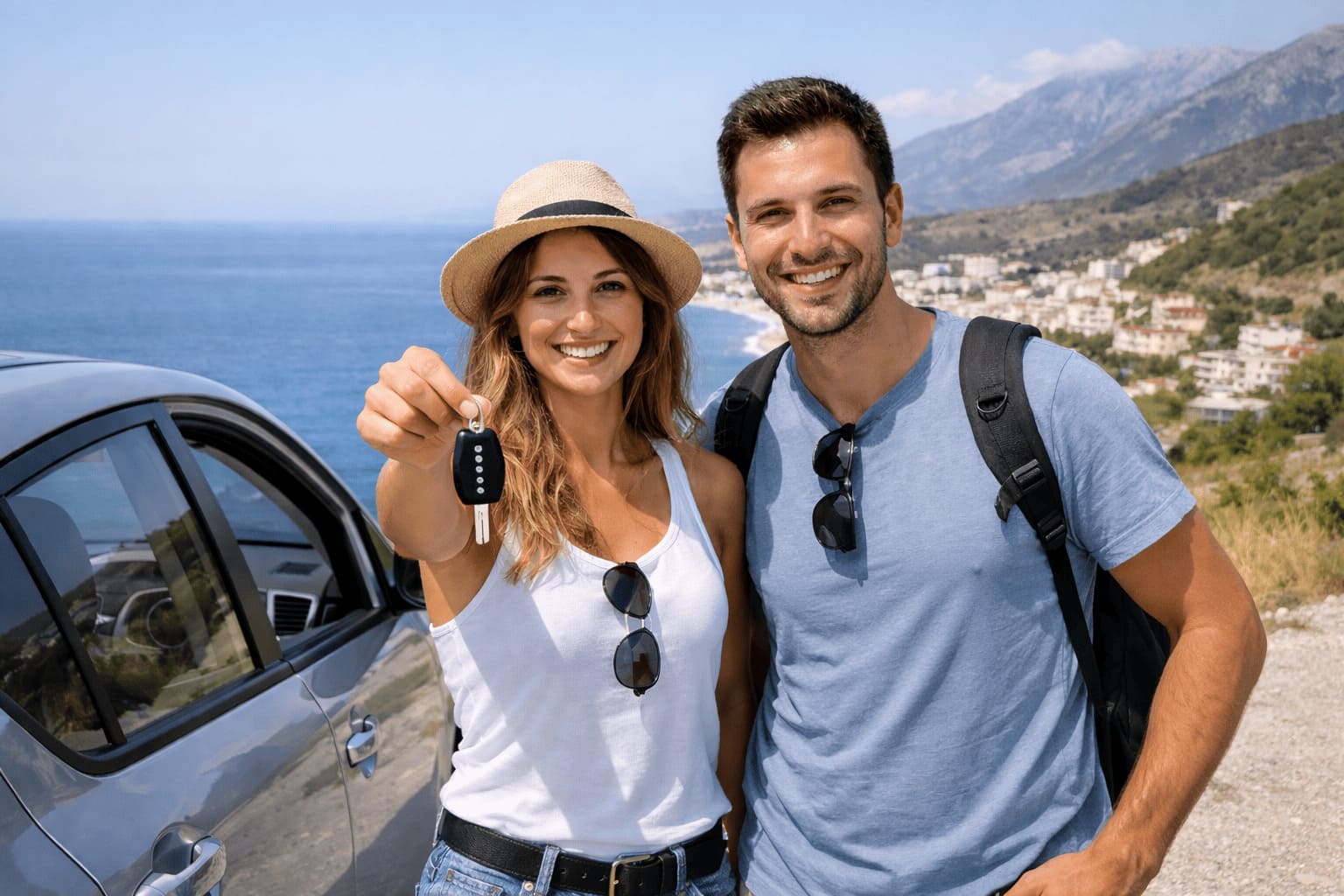
Albania is one of Europe’s fastest-growing destinations. In 2024, the country recorded 11.7 million international arrivals — a 15% jump from the previous year. Most of that growth is happening outside Tirana: in mountain villages, coastal bays, and UNESCO-recognized castle towns that buses simply don’t reach. That is why travellers who choose to rent a car Albania see a completely different country from those who stay on organised tours.
Here is everything you need to know before you pick up the keys.
Who Can Rent a Car in Albania
Before booking, check the standard requirements most companies apply:
- Minimum age: 21 years at most companies; some require 23–25 and add a young driver surcharge of €5–10 per day
- Driving licence: EU licences are accepted without additional documents; non-EU travellers should carry an International Driving Permit alongside their national licence
- Credit card: required to block the security deposit, even when the rental itself is paid in cash
- Experience: a minimum of 1–2 years of driving history is standard across most operators
Confirm cross-border rules before signing. The majority of local companies prohibit driving into North Macedonia, Kosovo, or Montenegro. Crossing without written permission voids your insurance coverage entirely.
Which Car to Choose
Vehicle choice matters more in Albania than in most European countries. Road quality varies dramatically between motorways, coastal routes, and mountain tracks.
| Route type | Typical condition | Recommended car |
| Tirana – Durrës – Vlorë motorway | Good asphalt | Any compact or sedan |
| Albanian Riviera coastal road | Paved but narrow | Small SUV or hatchback |
| Theth / Valbonë mountain roads | Gravel, steep switchbacks | High-clearance 4WD |
| Berat, Gjirokastër old towns | Cobblestone, very narrow | Small city car |
For a standard itinerary mixing coastal towns with one or two inland cities, a compact SUV handles most situations comfortably. If the plan includes mountain villages or travel outside July–August, a 4WD is worth the extra daily cost.
Driving Rules: What You Need to Know
Albania is a signatory to the Vienna Convention on Road Signs and Signals. Road markings and signs follow standard European conventions, so the visual language of the road will feel familiar. That said, several specific rules catch foreign travellers off guard.
Speed limits:
- 40–60 km/h in urban areas
- 80–90 km/h on national roads outside built-up areas
- 110 km/h on motorways
Alcohol limit: effectively zero. The legal blood alcohol content is 0.01% — less than a single small beer. Police conduct roadside breath tests regularly. Refusal to take a test results in an automatic fine and licence suspension.
Other rules every renter must follow:
- Seatbelts mandatory for all passengers, front and rear seats
- Hands-free devices only for mobile phones — handheld use is fineable
- Headlights on at all times, including daytime driving
- Always carry your licence, vehicle registration, and insurance documents
Traffic police are active on main roads and pay particular attention to rental cars with foreign plates. Drive to the posted limit regardless of local traffic pace around you.
Practical Tips Before You Set Off
A few habits reduce friction considerably when driving in Albania.
Book 3–4 weeks early. SUVs and 4WD vehicles sell out first during July–August. Early booking gives you the best combination of price and choice.
Carry cash for fuel. Many petrol stations outside Tirana do not accept cards. Keep 2,000–3,000 Albanian lek (roughly €20–30) in cash and fill the tank before heading into rural areas.
Avoid driving after dark. Road lighting outside towns is minimal or absent. Potholes, unlit vehicles, and livestock on the road are genuine hazards after sunset. Plan drives to arrive before dark.
Inspect the car at pickup. Photograph every scratch, dent, and scuff before driving off. Confirm all damage is noted on the rental agreement. This is the main protection against disputes at return.
Download offline maps. Google Maps works well in cities but signal drops in mountain zones. Download the Albania map in advance via Google Maps or Maps.me before leaving Tirana.
What to Expect on the Road
Albanian driving culture takes some adjustment. Overtaking on narrow roads, double parking mid-street, and informal lane use are common. The practical response is defensive driving — maintain extra space, assume others may not follow rules, and avoid reacting to aggressive behaviour.
Livestock on the road is not unusual in highland areas. Slow down gradually and wait — there is no faster solution.
Tourism investment is also reshaping the road network itself. According to the World Bank, major infrastructure improvements across southern Albania — including road upgrades around Berat, Gjirokastër, and Saranda — have directly supported the country’s record tourism growth. Routes that required a 4WD just a few years ago are now accessible in a standard car.
Emergency numbers: police — 129, general emergency — 112.
FAQ
Do I need an International Driving Permit to rent a car in Albania?
EU licence holders do not legally require one. Non-EU travellers should carry an IDP alongside their national licence — some police checkpoints and rental companies prefer to see it.
Can I take an Albanian rental car into a neighbouring country?
Usually no. Most companies prohibit cross-border travel. A few allow entry into Kosovo with prior written permission and an additional fee. Always confirm this in writing before booking.
What is the minimum age to rent a car in Albania?
The standard minimum is 21. Drivers under 25 often pay a young driver surcharge. Requirements vary between companies, so check the specific terms before reserving.
Is it safe to drive in Albania as a tourist?
Yes, with preparation. Roads have improved significantly in recent years. Drive at the posted limits, avoid night driving outside cities, and choose the right vehicle for your planned route.
What should I do after a road accident in Albania?
Albanian law requires all drivers to wait for police before moving vehicles. Call 129 (police) or 112 (emergency). Do not move the car until officers arrive and document the scene.